Day 1 – 18.11.2025 – HealthTech in Brussels – where AI meets Robotics for better care
This event was designed to connect the region’s top researchers, innovators, care providers, and public authorities around the future of health technologies, which aligns with the goals of the TBrainBoost project.
14:30 – 14:45: Welcome & Introduction
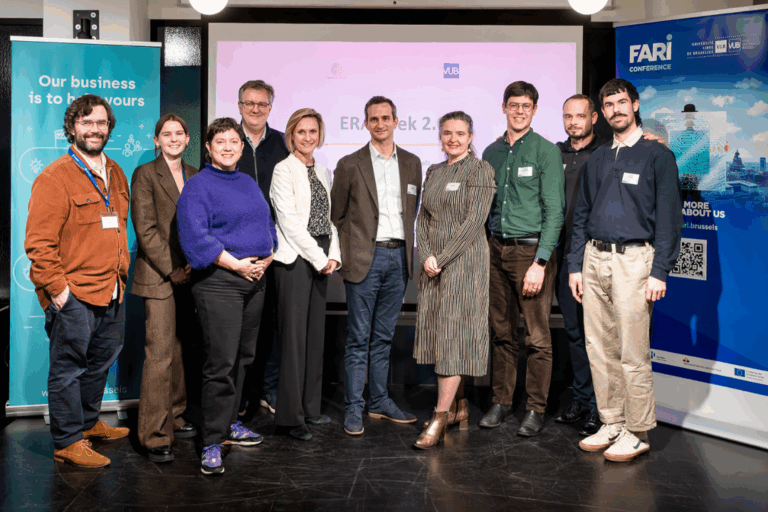
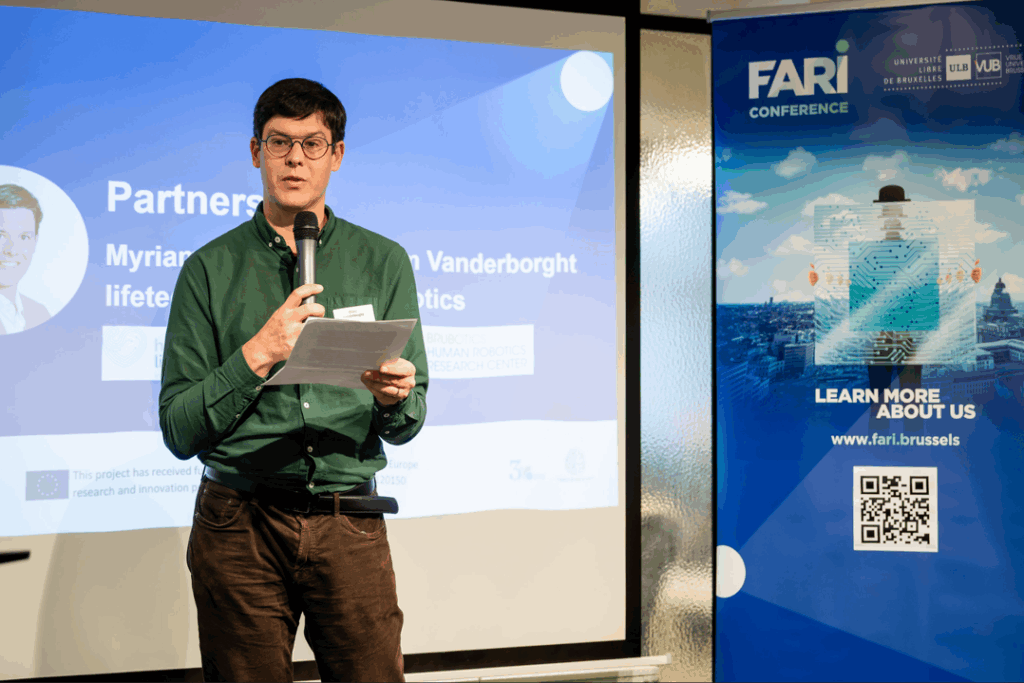
Welcome words from moderator Birgit Morlion, Bram Vanderborght (president of Brubotics), and Carl Morch-Laura Jousset (Coordinator FARI-Head of Marketing and Communications)
14:45 – 16:00: Born in academia: Tech Transfer & Applied R&D
1° Ramzi Ben Hassen (Medtech Lab ULB) – Decoding brain connectivity with AI
Our project is to use brain connectivity and machine learning to propose a forecasting and diagnosis tool for epileptic seizures that can support clinicians, especially in intensive care settings. The results showed that brain connectivity is a promising biomarker for seizure-related conditions. Furthermore, this study provides a pipeline and highlights the potential of fully automated EEG connectivity analyses in clinical practice.
2° Joris De Winter (MFYS-R&MM VUB) – Skinetix
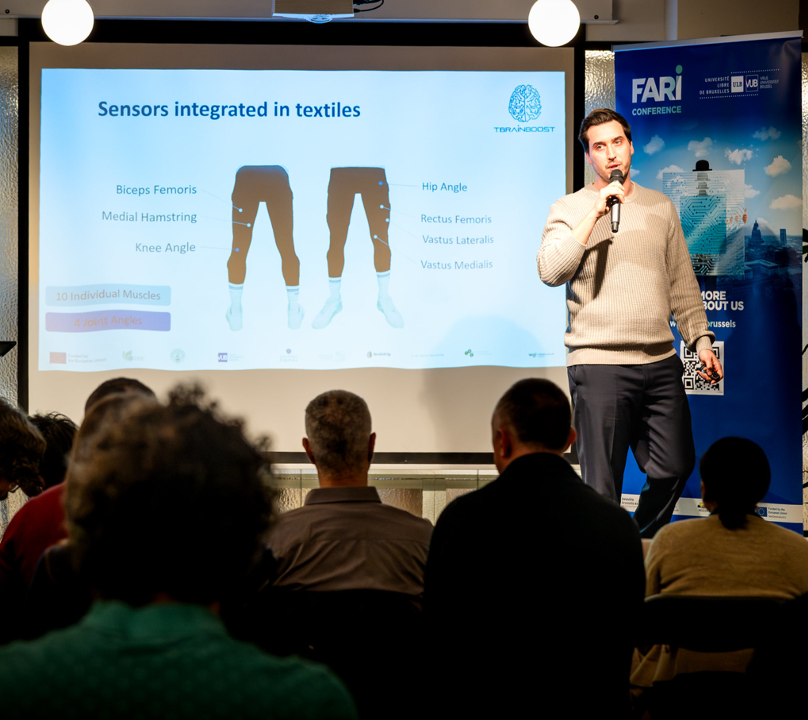
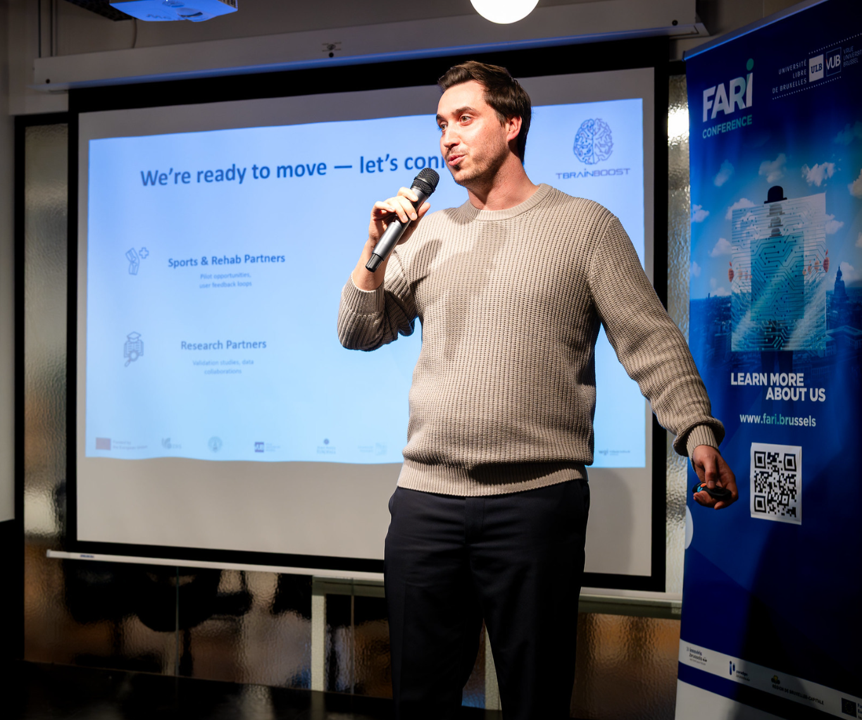
This session elaborated on the process of developing smart textiles for athletes. The technology includes biomechanical and physiological sensors into garments, which allows for continuous kinematics and muscle monitoring during rehabilitation and training sessions. In the process of technology development the search for sports & rehabilitation partners, as well as research partners continues. Research data will be used to convince investors of the potential of the product.
3° Nikos Deligiannis (ETRO VUB & imec) – Explainable and Trustworthy AI
This talk focused on explainable and trustworthy AI for healthcare, with a particular emphasis on keeping medical specialists in control of AI-supported decisions. He presented our work on an AI-assisted clinical coding system that suggests ICD codes together with transparent textual highlights, enabling coders to quickly understand and validate each suggestion. The approach combines medical knowledge, human-in-the-loop feedback, and continuous learning so that the system can adapt to local coding practices while improving efficiency and consistency. More broadly, he argued for human-centered AI solutions that integrate smoothly into clinical workflows rather than functioning as opaque black boxes.
4° Taylor Frantz (ETRO VUB) – TARC
This talk highlighted the work on the SARA project, focusing on advancing next-generation computer-assisted surgery tool, particularly the integration of augmented reality technologies to improve surgical planning and intraoperative guidance. He further discussed how innovative AR-based navigation systems can increase precision and clinical applicability in neurosurgical and orthopedic procedures, aiming to bridge laboratory research and real-world medical impact.
5° An Jacobs (SMIT VUB) – The challenge of design
This talk focused on designing a new methodology to help researchers. Designers en health professionals to design more meaningful human oversight when deploying AI driven systems in healthcare practice. To avoid symbolic rubberstamping by identifying the risks, the people involved in the system and their capabilities and collaborative deciding how to monitor and mitigate those AI induced risks in a more systematic way . Minimalizing errors in a meaningful way, and creating awareness that systems and people make mistakes.
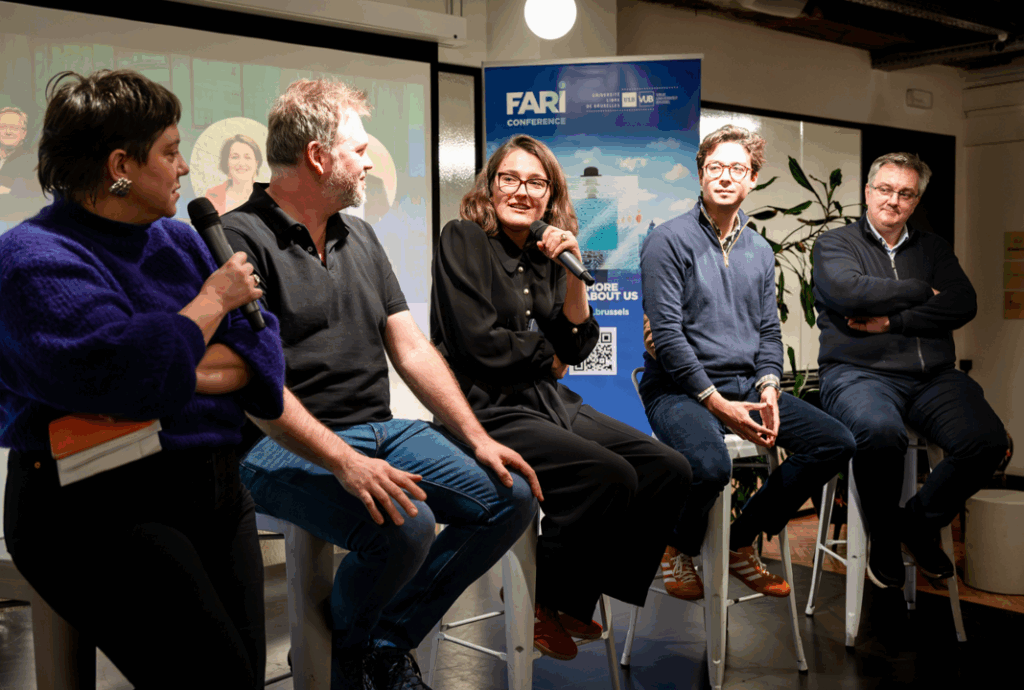
16:00 – 17:00: AI – robotics adoption for care: Company journey talks
Louis-Philippe Broze (Spentys), Adrian Munteanu (ETRO VUB), Segolene Martin (Kantify) and Arnau De Decker (Sagacify)
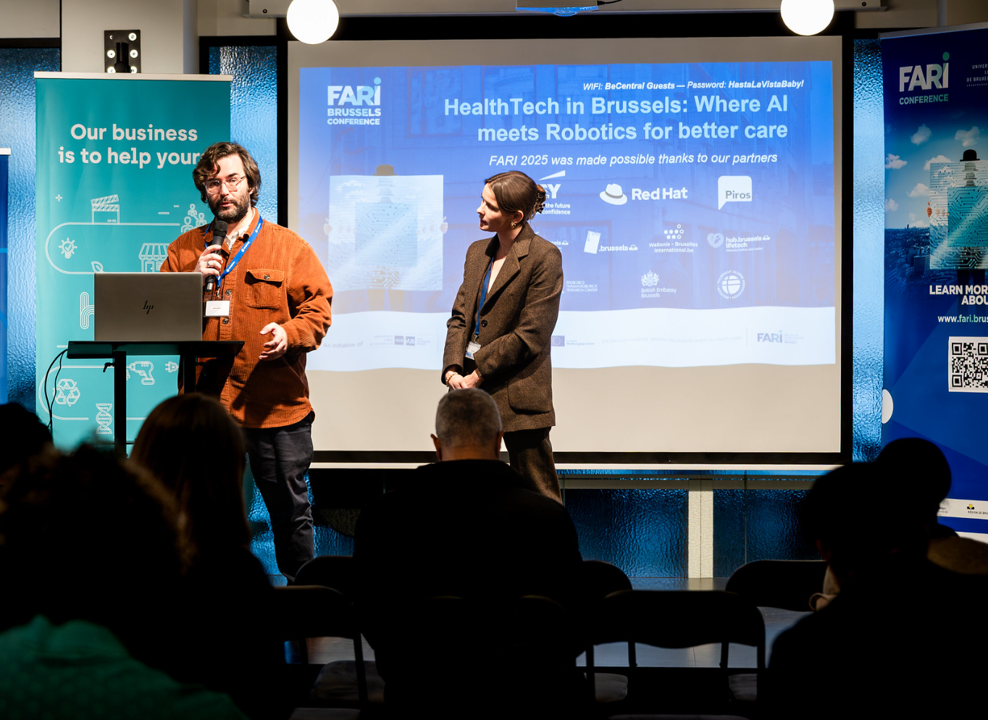
After introducing the main goals of the TBrainBoost project, i.e. enhancing academia and industry collaboration, and enhancing researchers’ entrepreneurship among others, a small introduction was provided emphasizing the rationale to organize this event, i.e. bringing together academia, hospitals, and startups to spark new collaborations. Several questions were raised such as 1° How do we move from research prototypes to real-world clinical or care use, and what are the biggest technical, regulatory, and adoption hurdles you faced along the way, 2° What role does AI play in augmenting or automating care processes, and how do you ensure the solutions are both clinically meaningful and trustworthy for health professionals and patients?, 3° What organizational, ethical, and data-governance practices are necessary to successfully integrate AI and robotics into care delivery, particularly under evolving regulatory frameworks such as the EU AI Act?
17:00 – 17:30: Use cases in the field: Focus on hospitals
Koen Wouters (clinical embryologist at University Hospital Brussels) – T’easy
T’easy is an automated AI-powered system designed to speed up and improve the accuracy of sperm detection in complex TESE samples, where manual searches are slow, skill-dependent, and prone to false negatives. It scans droplets automatically, highlights suspected sperm, and allows embryologists to navigate precisely to each finding for confirmation and immediate use in ICSI. Across phased development, the AI was trained and validated on thousands of annotated images, achieving high performance with recall up to ~95% and precision up to ~98%.
In proof-of-concept testing, T’easy detected sperm nearly as well as human experts but in significantly less time—around 10 minutes versus 14–23 minutes per sample.
Overall, T’easy reduces workload, increases consistency, and shows strong potential for AI-assisted IVF workflows, with future work focused on broader datasets, system integration, and further clinical validation.

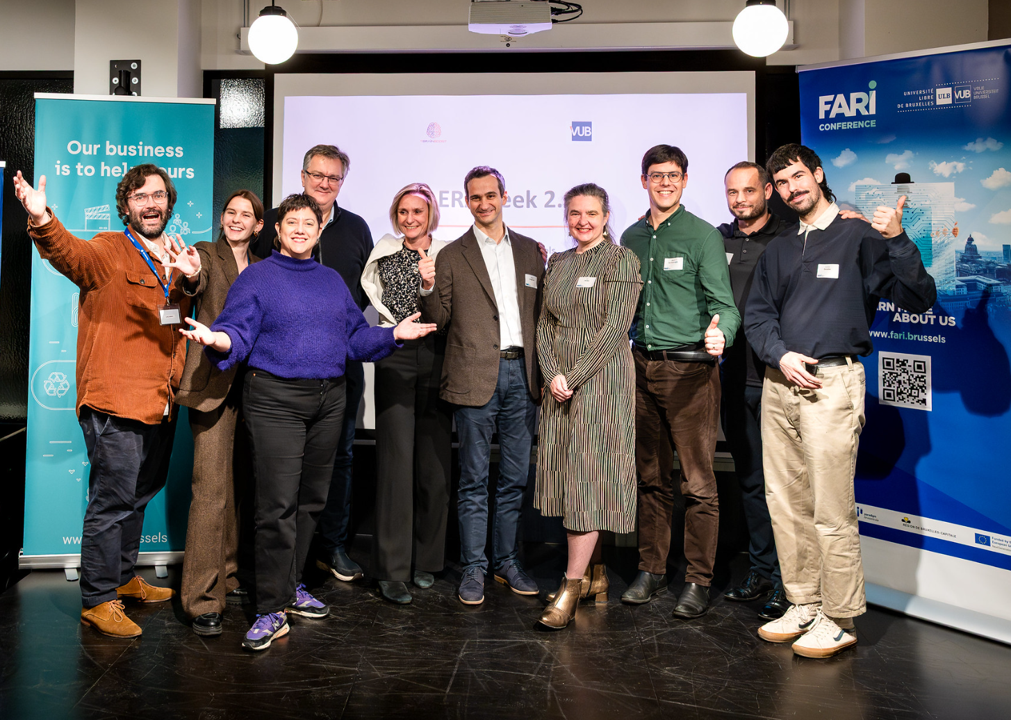
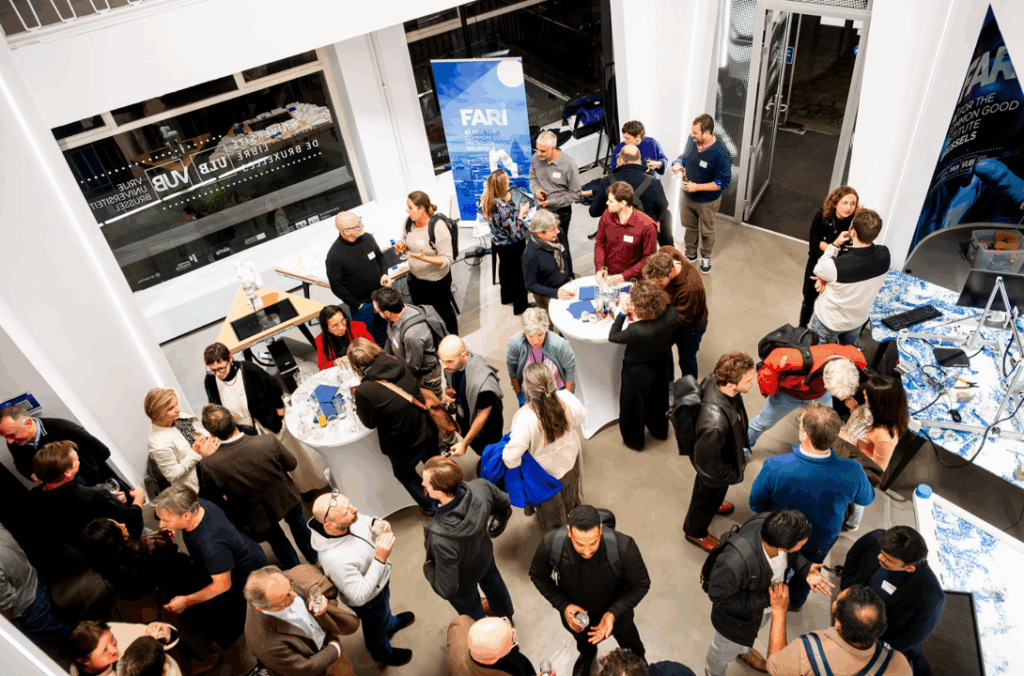
17:30 – 20:00: Networking
Day 2 – 19.11.2025 – Lab visits and demos
To align with the vision and mission of the TBrainBoost project a series of laboratory visits with live demonstrations were organized to show that Brubotics is strongly engaged in transferring robotic technologies to society through spinoff companies and industrial partnerships.
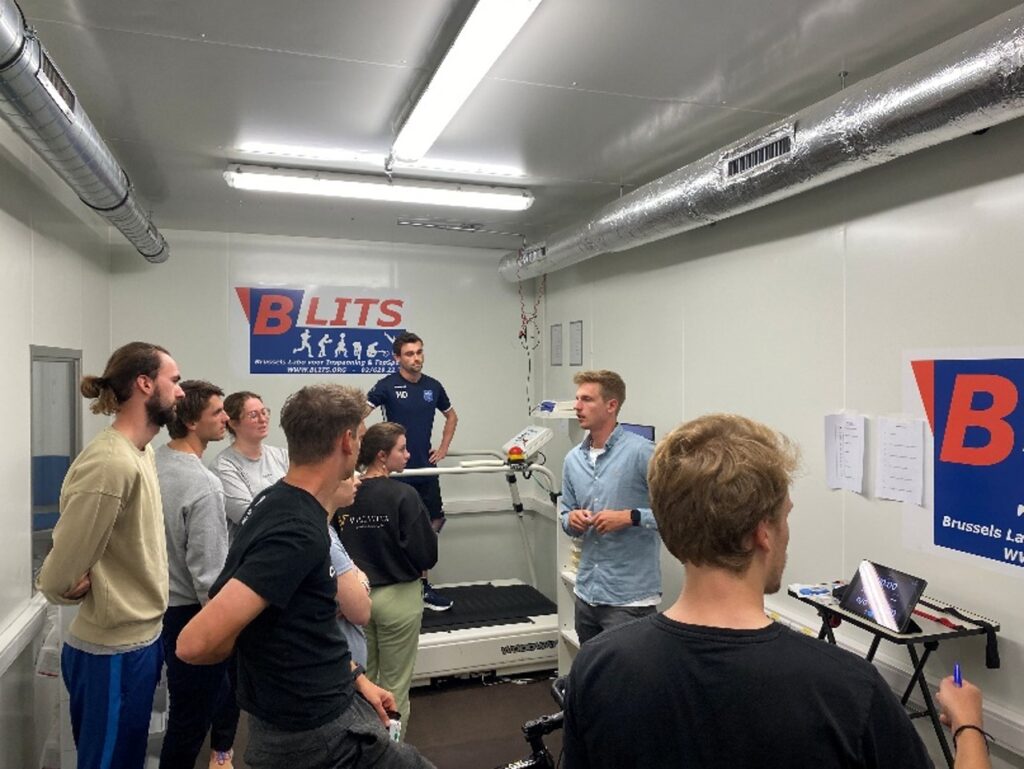
The first visit, scheduled between 13:30-14:30 took place at the Human Performance Lab (MFYS – BLITS) of the VUB, where researchers investigate human responses to robotic and assistive technologies. This facility integrates a wide range of subjective and objective measurement tools, including advanced biomechanics (motion capture, force plates), exercise physiology (EMG, metabolic analysis), and medical imaging techniques, enabling a comprehensive evaluation of human-robot interaction and human performance.
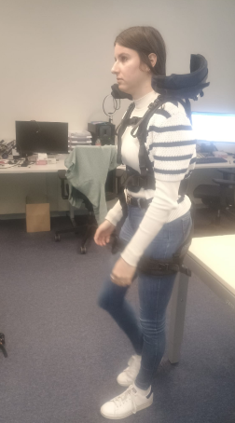
The second visit, from 14:45 to 15:45, explored AugmentX, a Flanders Make laboratory, that serves for many years as the core biomechanics laboratory at the VUB. AugmentX specializes in the testing and validation of robotic applications, such as occupational exoskeletons and collaborative robots (cobots), and ergonomic assistive devices. The facility provides high-precision assessment tools for analyzing movement quality, physical load, and human-machine synergy in both laboratory and simulated workplace environments.
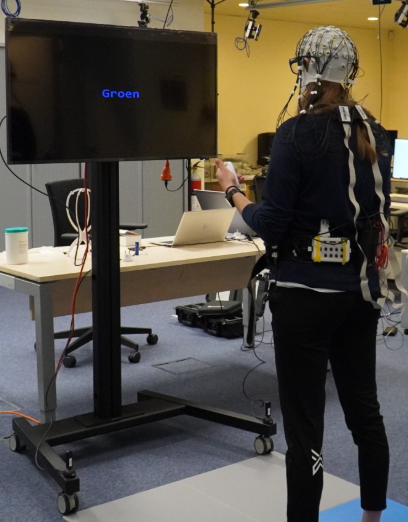
The final visit, scheduled from 16:00 to 17:00, was to the Humanise core facility, a state-of-the-art research infrastructure dedicated to studying human cognition, neurophysiology, and psychophysiological interaction with technology. Humanise offers advanced measurement capabilities for exploring brain–computer interaction, perception, attention, cognitive load, and neural markers of human–robot cooperation.
During this session, researchers demonstrated several EEG technologies, including systems such as the LiveAMP (BrainProducts) portable amplifier, which enables high-quality wireless EEG recordings during movement and real-world tasks. These demonstrations highlighted how neurophysiological data can be integrated into robotics research—for example, assessing mental workload, monitoring stress or fatigue, and enabling adaptive or neuro-responsive robotic systems.